Why 'One-Stop Shop' Claims in Industrial Supply Are Red Flags (Not Green Lights)
I Don't Trust a Vendor Who Claims to Do Everything
After 7 years and roughly 400 emergency procurement orders for everything from OPGW cable clamps to specialized rock drill bits, I've come to a hard conclusion: the vendor who brags about being a 'one-stop shop' is usually the one I trust the least. It took me a few expensive mistakes to get there, but the pattern is undeniable. In an industry like energy and mining—where a failed component can cascade into a shutdown that costs tens of thousands per hour—specialization isn't a weakness; it's the only safety net that matters.
The Myth of the Industrial Supermarket
Look, in theory, the concept is seductive. You call one number, you get OPGW, the fusion splicer, the mining drill steel, and the Cat 6 patch panel. Sounds like a dream for a stressed-out procurement manager, right? In reality, my experience is that this model consistently fails under pressure.
Here is the core of the argument: A supplier who claims expertise across fundamentally different engineering domains (like high-voltage transmission and percussive rock drilling) is almost certainly bluffing on at least one of them. The physics, the supply chains, and the failure modes are just too different.
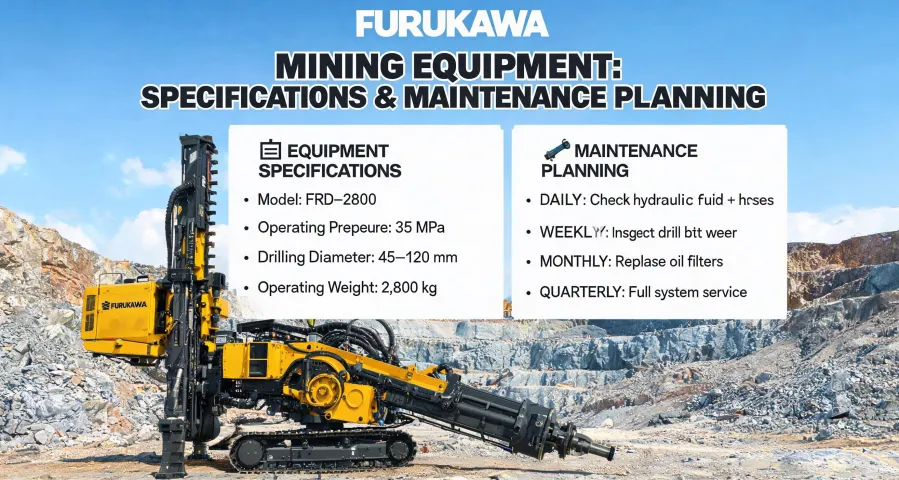
Consider the difference between our OPGW division and the rock drill division at Furukawa. They share a brand name, but they operate with entirely different engineering teams, testing protocols, and logistic chains. One deals with high-tensile steel and optical fiber; the other deals with hydraulic impact and tungsten carbide. Pretending they are interchangeable at the sales level is a disservice to the customer.
Three Red Flags from the Trenches
When I am triaging a rush order for a mining client who needs a specific drill shank adapter by Friday, these three flags tell me I am dealing with a generalist, not a specialist.
1. The "We Can Get That" without a Specific Lead Time
This is the biggest lie. If a sales rep says 'We can get that' for a niche item like a specific OPGW fiber count or a custom rock drill bit, but cannot immediately tell me the exact factory lead time and the shipping cut-off, they are gambling. In March 2024, we had a client lose a 48-hour window for a critical fiber splice because a 'one-stop' vendor promised a patch panel they couldn't source. They said '3 days' and it took 10. We ended up paying an extra $450 for freight from a specialist, but we saved the client's $80,000 installation schedule.
2. The Catalog is Too Broad, the Knowledge Too Thin
I respect a vendor who says, 'We do OPGW hardware and fusion splicers, but for fiber patch panels, here is the manufacturer we use.' That shows expertise. A vendor whose catalog goes from heavy mining equipment to office network cables is spreading their technical support too thin. When you call with a specific problem—like a stress corrosion issue on a rock drill thread—you need a person who has seen that exact failure, not someone reading a spec sheet.
3. They Never Say "No"
This is the most counter-intuitive sign. The vendor who said 'this isn't our strength—here's who does it better' earned my trust for everything else. I went back and forth between a large European industrial conglomerate and a specialized Japanese tooling maker for a complex fiber optic connector issue. The conglomerate said 'we can probably handle that.' The specialist said, 'We don't make that connector, but Furukawa's factory does. Here is the product code and the typical lead time.' The specialist won the entire contract for the easier stuff because they were honest about the hard stuff.
Refuting the Obvious Objection: What About Convenience?
I know what you are thinking. "But consolidating vendors saves administrative time." That's true—at least, that's been my experience with standard, non-critical MRO items like connectors and generic cabling. For commodity parts, a broad catalog works fine.
But for engineered products—the stuff that keeps the lights on and the mine running—this logic fails. The administrative savings of one invoice is quickly erased by the cost of one wrong part. A single mis-specified rock drill rod can break a $5,000 drill bit. A single splice closure with the wrong gasket can cause a fiber outage that costs ten times the price of the part in overtime.
Conclusion: The Best Partner Knows Their Boundary
I'd rather work with a specialist who knows their limits than a generalist who overpromises. The best industrial partners I have worked with—whether for OPGW, fiber optics, or mining equipment—are the ones who can clearly articulate what they do better than anyone else, and then confidently point you to someone else for the rest. That is not a weakness. That is the highest form of professional integrity.
Respect the boundary of expertise. Your uptime depends on it.