The Schramm Rig Configuration Mistake That Cost Us $14,000
The Problem You Think You Have
In early 2023, we ordered a rotary rig configured for what the dealer called “standard water well work.” The quote came in clean. The rig arrived on time. And then, about three days into the first job, we started losing hammers.
By the end of that month we were $14,000 into rework and six weeks behind on a client’s schedule. The rig itself was solid — I want to be honest about that part. Schramm builds a good machine. What we got wrong was the configuration.
If you’ve ever spec’d a rig from a PDF and a phone call, you probably know the feeling — everything looks reasonable on paper until it isn’t. I’ve documented this one about five times now, mostly for our own team. Here’s the short version, because if you’re about to spec a rig, I’d rather you skip the part where you learn it the expensive way.
The mistake wasn’t in the price. It wasn’t in the brand. It was in the assumption that a spec sheet describes your site. It doesn’t.
The Deeper Problem: You’re Buying a Rig, Not a Spec Sheet
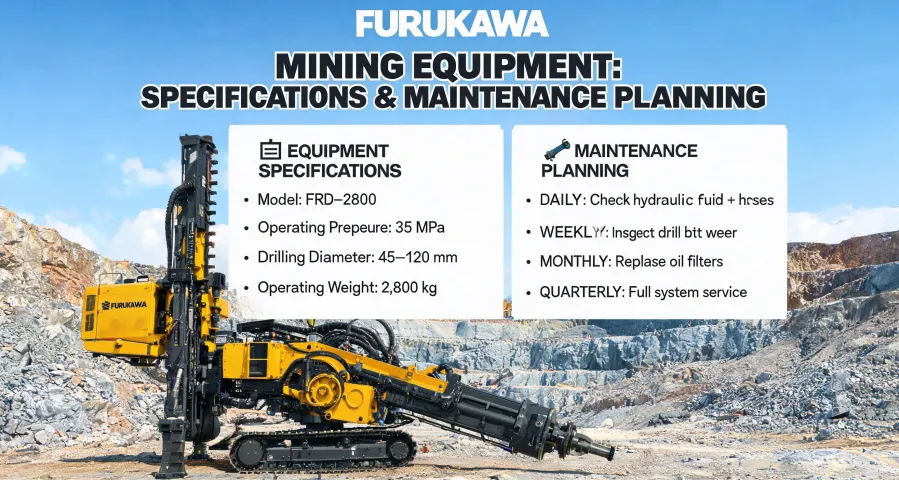
A rig spec sheet describes a machine working under assumptions. Flat pad. Dry hole. Consistent formation. Predictable water table. If your site matches all four of those, the standard config is probably fine.
Ours didn’t.
We were moving from soft-formation water well work (this was back in 2021–2022, mostly sand and clay) into a geothermal job with fractured rock. Tighter hole tolerance, different water table behavior, and a casing plan that didn’t line up with what the previous rig had been set up for. We spec’d the new rig using the last rig’s logic, because the last two jobs had gone fine and the quote looked right. That’s the whole mistake, distilled: we treated “it worked last time” as a spec.
It cost us two down-hole hammers before we caught it. The mast and feed system on the rig were matched to the previous job’s formation, not the new one. The hammer spec we chose didn’t play well with fractured rock. We burned through two hammers, then re-spec’d, then waited on parts — which brings me to the second problem nobody on our side was measuring properly at the time.
Parts lineage. If you’re buying new, this is mostly a non-issue; the factory trace is clean. If you’re buying used or reconditioned, it absolutely is an issue. We learned that in September 2022, when a used rig we were evaluating had a service history that read clean on the summary page but had three unlogged rebuilds underneath. Nothing wrong with the rig. Everything wrong with our assumption that the summary page told the full story.
They warned me to pull the full service log before we made an offer. I didn’t. Two of the three hidden rebuilds turned out to be parts we’d have to special-order anyway, which changed the math on the entire deal. We walked, but we walked late.
Here’s what I tell our team now, and what I tell people who ask: you’re not buying a rig, you’re buying a rig matched to a drilling condition. Those are two different purchases, and only one of them has a spec sheet.
The other thing that’s way less obvious than it should be: mobilization. A rig that’s perfectly configured for the formation but can’t reach your pad without a crane and a permit is, practically speaking, a rig you can’t bill against. We short-listed two configurations in 2023 that were both technically viable and only one of them was actually movable with the equipment we owned. Nobody on the sales side mentioned it. Why would they? It’s not on the spec sheet.
What It Actually Costs
Let me put real numbers on this, because “rework is expensive” is too vague to be useful.
On the geothermal job alone:
- Hammer replacements: roughly $9,400 (two hammers plus the exchange)
- Mast re-alignment after the first run: about $2,800
- Client-side delay penalty: $8,500
- Idle crew time: five days, roughly $4,200 in wages
That’s about $25,000 before you count the reputational piece, which is the part I still can’t put a number on six months later. And none of those line items is catastrophic on its own. Cumulatively, they’re the difference between a good quarter and a bad one.
I don’t have hard data on how often this happens industry-wide. I wish I’d tracked it more carefully from the start. What I can say anecdotally: in our own order history, roughly 8 of the last 20 rig spec reviews I’ve been part of had at least one configuration item that didn’t match the site. That’s not a market statistic — it’s my personal sample — but it’s enough that we built a checklist around it.
From a total-cost-of-ownership angle, the hidden costs stack up fast (think base rig price, mobilization config, parts inventory for the specific formation, service network distance, downtime cost per day). The lowest quoted number is almost never the lowest total. On rigs specifically, the gap between “spec-sheet standard” and “site-matched” can run 15–20% on first-year maintenance, and that’s before you count the days you spend on the phone explaining to a client why the rig isn’t moving.
What We Do Now (Brief)
I’d rather spend 40 minutes walking a client through a formation matrix than deal with the rework six months later. An informed buyer specs better — that’s not a sales line, it’s just what the numbers say.
Here’s the pre-check list we run now, every time, before we spec or sign anything:
- Build a formation matrix first. Hole diameter, target depth, rock type, water table, casing plan. Do this before you talk to a dealer.
- Match the hammer and bit to the formation, not the rig. A great rig with the wrong hammer is an expensive problem.
- Verify parts lineage on any used rig. Full service log, serial trace, last rebuild date. If the summary page is clean, ask to see the underlying log (note to self: this is the one we still forget on short timelines).
- Read the mobilization plan. What does it take to move this to your site, and back? A rig that can’t reach your pad on time is a rig you can’t bill against.
- Count the service network distance. How many days to a critical part? If the answer is “we’ll find out,” that’s a data gap, not a plan.
That’s it. Nothing on that list is exotic. All of it was on the list I ignored in 2022.
Bottom line: the rig itself is rarely the problem. The gap between the spec sheet and your site is. Close that gap before you sign, and you skip most of what we learned the expensive way.
Prices cited are from Q4 2022–Q3 2023 internal records; verify current rates with your dealer. This worked for us on rigs we run ourselves — if you’re leasing or renting, the parts-inventory calculus is probably different.