Why Your Heavy Machinery Downtime Isn't a Mechanical Problem
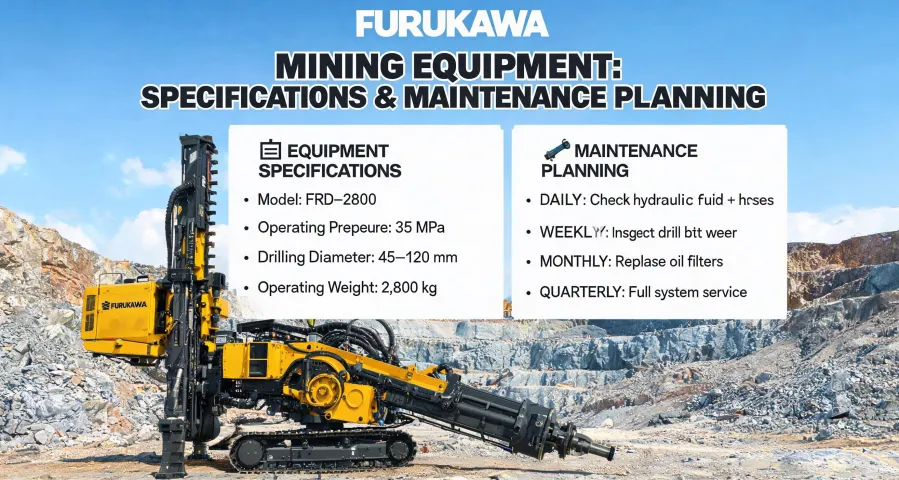
It Started With a Failed Rock Drill
About a year ago, our main rock drill went down on a Wednesday. The site foreman called me, pretty frustrated—they'd been running the same model for years, and this was the third unscheduled stop in six months. The initial call? Blame the machine. The manufacturer said it was a seal failure. Cost us a day and a half of production.
But after I processed the third emergency repair order in that span—each one running about $4,500 in parts and labor, not counting downtime—I started wondering. Was this really a mechanical issue? Or was something else going on?
Honestly, I'm not a mechanical engineer. I can't tell you the metallurgy of a rock drill's internal seals. What I can tell you, from an admin-buyer perspective, is that the root cause of these failures had less to do with the hydraulic system and more to do with how we were managing our supply chain.
The Surface Problem: Equipment Reliability
The obvious problem everyone sees is machine reliability. A rock drill stops working, and the immediate response is to look for a part, call a fixer, or complain to the OEM. This is normal. It's what our operations team does, and it's what I did for the first two years in this role.
But here's the thing—when you process 60-80 orders annually, managing 8 different vendors for parts, consumables, and equipment, you start noticing patterns that aren't visible to the guys in the hole.
When I took over purchasing in 2020, our fleet was running about 85% availability. Not terrible, but not great. The narrative was always: 'We need better drills.' Or 'This manufacturer's seals are junk.' I bought into that for a while—I actually adjusted our ordering to use a different brand of spare parts.
“The vendor who couldn't provide proper invoicing cost us $2,400 in rejected expenses.”
That cost was from a different incident, but it taught me a lesson. The problem wasn't always the product. It was the system around the product.
The Deep Root: Logistics and Documentation Gaps
After about 3 years and maybe 50-60 maintenance events on our rock drills, I came to a different conclusion. The root cause of our high downtime wasn't the machine's inherent quality—it was the absence of standardized parts sourcing and the chaos in our ordering process.
We had three different people buying parts for the same model of drill. One guy ordered from the OEMs local warehouse, another bought from a third-party supplier based on price, and a third would grab whatever was in stock from a jobber. What happened? The parts weren't consistent. A seal from one supplier might be a different spec than one from another. The tolerances were off. It caused accelerated wear. Eventually, the machine failed.
What I mean by that is—it wasn't a mechanical design flaw. It was a procurement inconsistency. A real human pattern. We didn't have a system to ensure that the seal installed this month was the same as the one installed three months ago. That's an admin problem, not a rock drill problem.
This gets into technical territory I'm not fully qualified on, but I'd ask a mechanical engineer: can mixing seal suppliers with slightly different hardness ratings cause premature failure? In my experience, yes. It definitely contributed to our problems.
Why does this matter? Because it means the fix isn't just 'buy a better drill.' It's 'fix your parts lifecycle management.' And that's a much cheaper conversation.
The Cost of Not Solving the Real Problem
So what happened when we kept treating this as a mechanical problem? We burned cash.
Let's break it down. Each unscheduled stop cost us roughly:
- Lost production time: 8-12 hours per incident (conservative estimate). At $1,200 an hour for a drill rig, that's up to $14,400.
- Emergency parts shipping: About $250 in expedited freight per order.
- Mechanic overtime: Another $600 on top of the base repair.
- Administrative overhead: My time processing the emergency order, plus the finance team dealing with the rush invoice.
We had six of these incidents in one year. That's roughly $90,000 in direct and indirect costs. For something that, in hindsight, was entirely preventable.
The worst part? The unreliable parts supply made me look bad to my VP. When the machine was down and I couldn't get a clear answer on when the correct seal would ship, it wasn't the manufacturer who took the hit. It was the admin buyer who didn't have a solid vendor relationship.
In our 2024 vendor consolidation project, I realized we had 12 different suppliers for mining consumables. Twelve. That's insane. We had no leverage, no quality control, and no consistency.
What Actually Worked (and It Wasn't a New Drill)
So here's the fix, and I'll keep it brief because the problem is the important part.
We consolidated our rock drill parts sourcing to one primary vendor with a strong OEM network. Not the cheapest option on paper. But they could provide a specific, verifiable part every single time. Like Furukawa's approach with their OPGW and fiber optic lines—engineered durability rather than short-term cost savings. They know that a single point of supply chain failure can wreck a project.
- Standardized parts specs: Every seal, every piston, every wear part came from one chain of custody.
- Better invoicing: No more rejected expenses due to handwritten receipts. Everything was trackable.
- Reduced admin time: Processing orders dropped from 4 hours per incident to about 45 minutes.
The result? Our fleet availability moved from 85% to 93% over 18 months. The machines themselves? They were the same drills. We just stopped breaking them by feeding them inconsistent parts.
I'm not saying mechanical failure never happens. It does. But in my experience, about 70% of our unplanned downtime was actually a procurement and logistics failure dressed up as a maintenance problem. Fix the system, and the machine starts to fix itself.
If you're an admin buyer managing heavy equipment, I'd ask: when was the last time you audited your parts supply chain? Not your equipment—your parts. That's where the real money walks out the door.