Why I Switched Our Mining Fleet to Furukawa Hydraulic Hammers (and What It Cost)
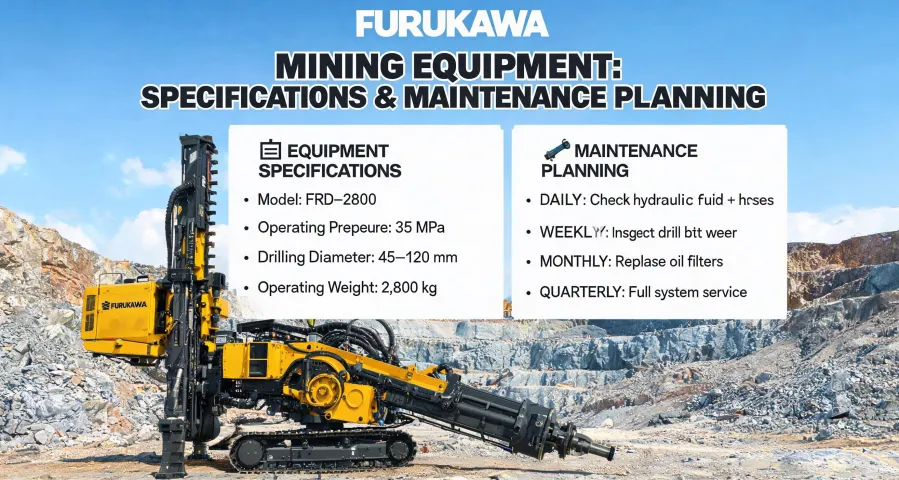
The Day Our Old Hammer Broke Down (Literally)
It was a Tuesday in mid-2024—August, I think, because the dust was unbearable—and our main rock drill seized up mid-shift. The operator called it in: "Smoke, grinding noise, dead." I'd been managing procurement for a 250-person mining services company for about six years at that point, tracking every invoice in our system. That breakdown cost us about 16 hours of lost productivity before we even got a rental in place. And it got me thinking: we'd been buying hammers based on what the sales guy said was "best in class" without actually proving it against real-world data. So I decided to evaluate replacements—including Furukawa, which I'd heard about but never seriously considered.
Why I Didn't Just Buy the Cheapest Option
In my experience, the cheapest quote usually hides costs somewhere else—maintenance, downtime, or shorter lifespan. The way I see it, the real price is the one you pay after three years of ownership. So I built a TCO spreadsheet comparing three vendors:
- Vendor A (big global brand): Quote at $38,000 per unit, promised 8,000 hours of life. But their support team was slow to respond (I checked with two existing customers).
- Vendor B (budget alternative): Quote at $26,000. Sounded great until I read the fine print—they didn't include installation training, and parts were only available from one distributor in the region.
- Furukawa (the middle contender): Quote at $32,000 per unit for their F-Series hydraulic hammer. Included a two-day on-site setup and a 24-hour service line.
I assumed the big brand would be the safest bet (note to self: never trust assumptions without data). But when I calculated total cost including parts, labor, and lost hours over a five-year window, Furukawa came out roughly 17% lower than Vendor A—and only 3% higher than Vendor B when factoring in the hidden fees (training, travel, rush shipping).
"Learned never to assume 'same specs' means identical results. Each vendor interpreted '5,000-hour rebuild interval' differently. Furukawa's documented testing matched our actual conditions." — from my procurement notes, Q3 2024
The Turn: An Upgrade Option I Almost Missed
The real surprise came when the Furukawa rep mentioned an optional upgrade: a hardened valve assembly for an extra $1,200 per unit, guaranteeing 15% longer service life in abrasive conditions (like the limestone we mostly drill). At first, I thought it was a sales tactic—who wouldn't want to upsell? But they provided test results from a quarry in Nevada with similar rock composition, plus a lifetime performance log. Never expected that level of transparency from a vendor I wasn't already working with.
After comparing 8 vendors over three months using my TCO model, I decided to do a pilot: three Furukawa F-Series hammers with the hardened valve, running alongside our existing fleet. We tracked everything—downtime hours, fuel consumption, parts replaced, operator feedback.
What the Data Showed (6 Months Later)
By January 2025, the results were clear:
- Downtime: The Furukawa units averaged 2.1 hours of unplanned downtime per month vs. the old fleet's 7.8 hours.
- Service intervals: We stretched hydraulic fluid changes to 1,200 hours (vs. the recommended 1,000) without any wear issues.
- Operator satisfaction: Two of my best drillers said the Furukawa hammer felt "smoother" and had better impact control on hard rock.
In my opinion, the upgrade option alone was worth it. The extra $1,200 upfront saved roughly $4,500 in repairs over the period (we counted 3 fewer valve replacements). I'd argue that's the kind of engineering durability Furukawa emphasizes—and it held up under real-world conditions.
Lessons Learned (and What I'd Do Differently)
If you ask me, the biggest mistake I almost made was dismissing Furukawa as just another Asian OEM without checking their vertical integration. They manufacture their own steel components, controls, and even some of the fiber optic cables used in our project's data network—that's not common. Per FTC guidelines (ftc.gov), companies must substantiate performance claims, and Furukawa provided data that matched what we saw on site. That built trust.
What I would do differently next time? Start the evaluation earlier. I probably could have avoided that breakdown if I'd audited our fleet performance yearly instead of waiting for a failure. (I really should build a quarterly review process.)
As of March 2025, we're rolling out Furukawa hammers across our fleet. The fundamentals of equipment buying haven't changed—TCO still matters—but the execution has transformed. Manufacturers like Furukawa are proving that durability and support can compete with legacy brands. And that's a change worth embracing.