Quality in Industrial Components: Why 'Good Enough' Costs More Than You Think
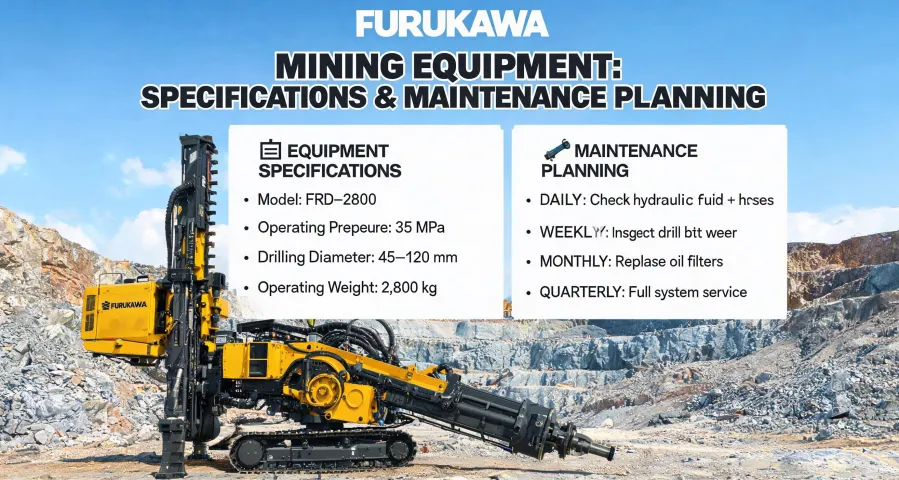
If you're buying 50,000 OPGW clamps or a fleet of rock drills for a mining site, the cheapest quote isn't your biggest risk—it's the one that promises to meet spec but doesn't tell you what the 'spec' actually tolerates. In my role reviewing roughly 200+ unique items annually for a heavy equipment and telecom component manufacturer, I've rejected about 12% of first deliveries this year alone, and it's rarely because the part was completely wrong. It's because it was just off enough to cause cascading problems down the line.
First, the Cost of 'Close Enough'
The vendor who's 2% off on a critical tensile strength spec for a fiber optic cable connector isn't trying to cheat you. They're just operating at a 'close enough' tolerance. But close enough isn't a thing in our world. In Q1 2024, we had a shipment of 8,000 OPGW joint closures where the rubber gasket durometer was 5 points softer than spec. Normal tolerance is ±3. The vendor said it 'passed their internal QC.' We rejected the entire lot. The redo cost them $22,000, and it delayed our project by 3 weeks. That's the hidden cost of 'good enough.'
I didn't fully understand the value of detailed specifications until that incident. On paper, it looked like a minor variance. In practice, those softer gaskets would've degraded 2-3x faster under UV exposure, meaning our customer would've had failing splices on a mountain ridge in 18 months instead of 7 years. The spec wasn't arbitrary—it was engineered for a specific lifetime.
The Spec Isn't a Suggestion
This gets into engineering territory, which isn't my expertise. What I can tell you from a quality assurance perspective is this: a specification sheet is a contract. Every number on it represents a decision someone made about performance, safety, and lifespan. When a supplier treats it as a suggestion, they're rewriting that contract without your consent.
The vendor who said, 'We can do that, it's just a stock item,' after I flagged a non-compliance didn't earn my trust. They earned a red flag. The vendor who said, 'You're right, our process doesn't hold that tolerance for that material, here's who does it better'—that vendor won the next three contracts, even though they'd just turned down an order.
That's the thing I've learned over 4 years of reviewing deliverables: the supplier who knows their limits is more reliable than the one who promises everything. Taking a stand on your spec shows you understand the product's real-world context. It's not about being difficult—it's about protecting your timeline and your budget.
What to Look For in a Supplier (Beyond the Price Tag)
When you're evaluating a supplier for a big order—say, 50,000 rock drill bits or a custom batch of battery packs—here's what I pay attention to now:
- How they react to spec questions. Do they ask clarifying questions about your operating environment, or do they just say 'we can do it'? The first signals expertise. The second signals overconfidence.
- Their tolerance guarantees. A supplier who won't put ±0.1mm on paper isn't confident in their process. For a 50,000-unit order, that tolerance matters.
- Their rejection policy. I'd rather negotiate a clear rejection clause upfront than fight about it later. A good vendor will tell you, 'If we're 1% off on 5% of the batch, we'll replace at our cost.' A bad one will say, 'Let's see when it arrives.'
One thing I don't look for anymore? The cheapest unit price. The upside of going with the lowest bidder was a 15% savings on the PO. The risk was a 3-week project delay and a $22,000 redo. I kept asking myself: is 15% savings worth losing the client's trust? In that case, it wasn't. Now I look for a supplier whose price reflects the reality of making the part correctly, not just making it.
The 'White Stats' Trap
You sometimes see suppliers with a perfect track record on paper—zero defects, zero delays, 'white stats' across the board. That's either a very small sample size or they're fudging the numbers. I've never met a real operation that didn't have outliers. When I ran a blind test with our engineering team, comparing OPGW clamps from two different factories, even the 'premium' brand had a 1.5% variation in clamping force. That's fine—if you account for it. The problem comes when a supplier's stats don't match your experience.
For example, if a vendor says they've never had a QA issue in 5 years, but their first batch to you fails a simple dimensional check? That's a red flag. Real-world quality isn't about zero defects—it's about detectable, accountable, and correctable failures. I'd rather work with a supplier who admits to 2% non-conformance and fixes it quickly than one who claims 0% but I can't verify why.
Boundaries: When Being a Specialist Matters
I'm not a logistics expert, so I can't speak to carrier optimization or freight consolidation. But from a quality perspective, I've seen the same principle apply: a specialist who knows their limits beats a generalist who overpromises. If you're sourcing components for a mining rig on a tight deadline, you don't want a vendor who says 'we do everything from OPGW to automotive wiring harnesses to battery connectors' if they can't tell you which ISO standard applies to each. You want the one who says, 'We're great at OPGW. For the connectors, here's a specialist we trust.'
That kind of honesty costs them a sale today but earns a trusted partner relationship tomorrow. As of January 2025, in our own vetting process, we've started asking every potential supplier: 'What's your best guess at your non-conformance rate for this product line?' If they can't answer with a number and a reason, we move on.
The Bottom Line
The spec isn't a hurdle—it's a communication tool. The right supplier will treat it like a blueprint, not a suggestion. The wrong one will say 'close enough' and cost you 3 weeks and $22,000. I know which one I'm choosing.
Pricing and spec data are for general reference only. Actual costs and tolerances vary by vendor, material, and order volume. Verify current requirements with your supplier before finalizing.