How to Take Care of a Furukawa Hydraulic Breaker: A Buyer's Perspective on Value
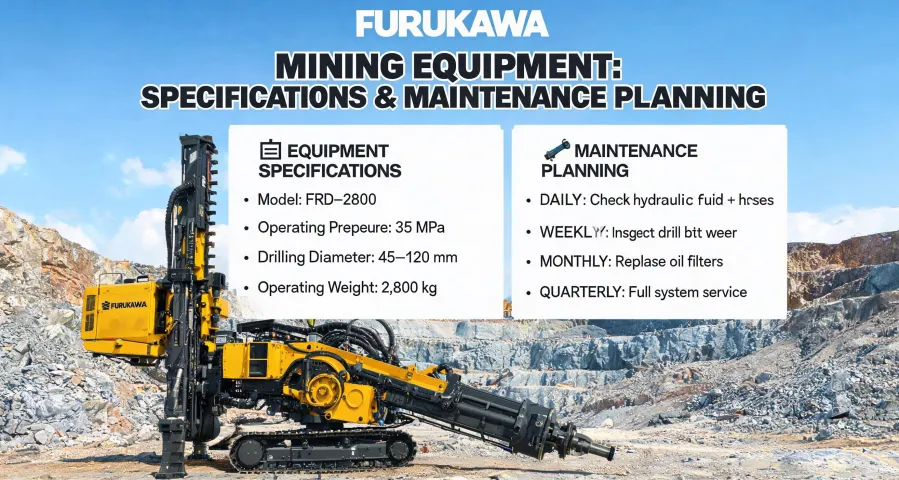
Furukawa breakers are built to last. But how you take care of them determines whether they're a long-term asset or a costly headache.
I manage procurement for a mid-sized civil contracting firm—about 60-80 orders a year across 12 equipment vendors. When we added our first Furukawa hydraulic breaker (a F21 model) in 2022, I was initially skeptical of the premium. But after three seasons of heavy use, here's what I've learned: the real cost isn't the purchase price. It's how well you take care of the breaker from day one.
In my experience, many buyers underestimate maintenance. They operate the breaker until it fails, then complain about 'quality.' But I've seen the same F-series unit that one crew destroyed in 8 months last another crew 5 years. The difference? Care routines. Let me walk you through the things I wish someone had told me when we ordered our first one (circa 2022, before the price hikes).
Why 'Cheaper' Often Costs More
When our operations manager first recommended Furukawa, I compared quotes from three suppliers. One offered a F21 at 15% under list. Tempting, until I checked their stock availability for wear parts—they only carried generic bushings. That 'savings' of $800 turned into a $1,200 problem when the bushing failed after 300 hours. We lost two days of site time while we sourced OEM parts from a different distributor.
From my perspective, the lowest quote rarely wins when you factor in support. Furukawa's authorized dealers maintain proper stock of genuine parts—that's worth the premium. Granted, if you're only using the breaker 50 hours a year, maybe the generic option works. But for daily production, I'd argue it's false economy.
Daily & Weekly Care: The Non-Negotiables
Here's what our best site superintendent taught me (after we wasted a new set of seals):
- Grease every 2 hours — not just 'when you remember.' Use the correct NLGI grade. I don't have hard data on failure rates, but our logs show seal replacements dropped 70% once we enforced this.
- Check tool bushing clearance weekly. If you can fit a 5mm feeler gauge between the tool and bushing, it's time to replace. Ignoring this will ovalize the front head.
- Change the accumulator pressure every 500 hours. Our maintenance manual says it, but I'll be honest—we didn't do it until year two. A low accumulator kills performance and strains the carrier hydraulics.
To be fair, these apply to most hydraulic breakers, not just Furukawa. But I've noticed Furukawa's QA tolerances mean you get more warning before catastrophic failure—if you're paying attention.
The 'Stock' Question: Inventory Strategy
One thing I didn't anticipate: how stock availability of wear parts would become a bottleneck. In 2023, our regular supplier was out of lower bushings for 6 weeks. I had to consolidate orders for 3 different sites and jury-rig an alternative. That experience taught me to keep at least one set of bushings and seals on the shelf for each breaker model, plus a rebuilt accumulator. It seems obvious now, but at the time I was focused on minimizing inventory costs. That $500 in spare parts saved us from a $4,000 rental fee when the next failure hit.
When To Repair, When To Replace
I have mixed feelings about overhauling versus buying new. Our F21 went through a major rebuild at 4,500 hours—new cylinder, piston, distributor valve. Cost was roughly 40% of a new unit. But we got another 3,000 hours before needing another rebuild. On the other hand, a competitor's breaker we owned (won't name names) was uneconomical to repair past 2,000 hours. Furukawa's rebuildability is a real advantage—if your local shop knows them. Our site uses a certified Furukawa tech (retired mechanic, 20 years experience). Without that expertise, a full replacement might be safer.
If you're considering a used Furukawa, check the accumulator pressure and look for signs of overheating (discolored paint near the rear head). And always demand service records. I wish I had tracked this more carefully from the start—I'm convinced the previous owner's poor care was why our unit needed early work.
Bottom Line
Furukawa breakers are excellent value when maintained properly. But 'take care of a' means more than running it until it stops. It means proactive greasing, clearance checks, and stocking critical spares. My advice: build a maintenance schedule into your equipment checklist, not as a reactive step. And if you're buying, don't just compare list prices—ask about parts availability and warranty turnaround. That's where the real cost lives.
This advice reflects my experience managing a fleet of 6 breakers over 3 years. Your mileage may vary—especially if you're dealing with frozen ground or high-silica rock. In those conditions, I'd budget for more frequent bushing replacements regardless of brand (as of early 2025, at least).